Where to Spend a Perfect Autumn Day in Seoul: 5 Local Walk + Café Routes
Last verified: October 19, 2026
Skip the "top 20 foliage spots" lists. Five half-day walks a Seoul local actually does in autumn, each ending at a café — with timing, cost and transport tips for first-time visitors.
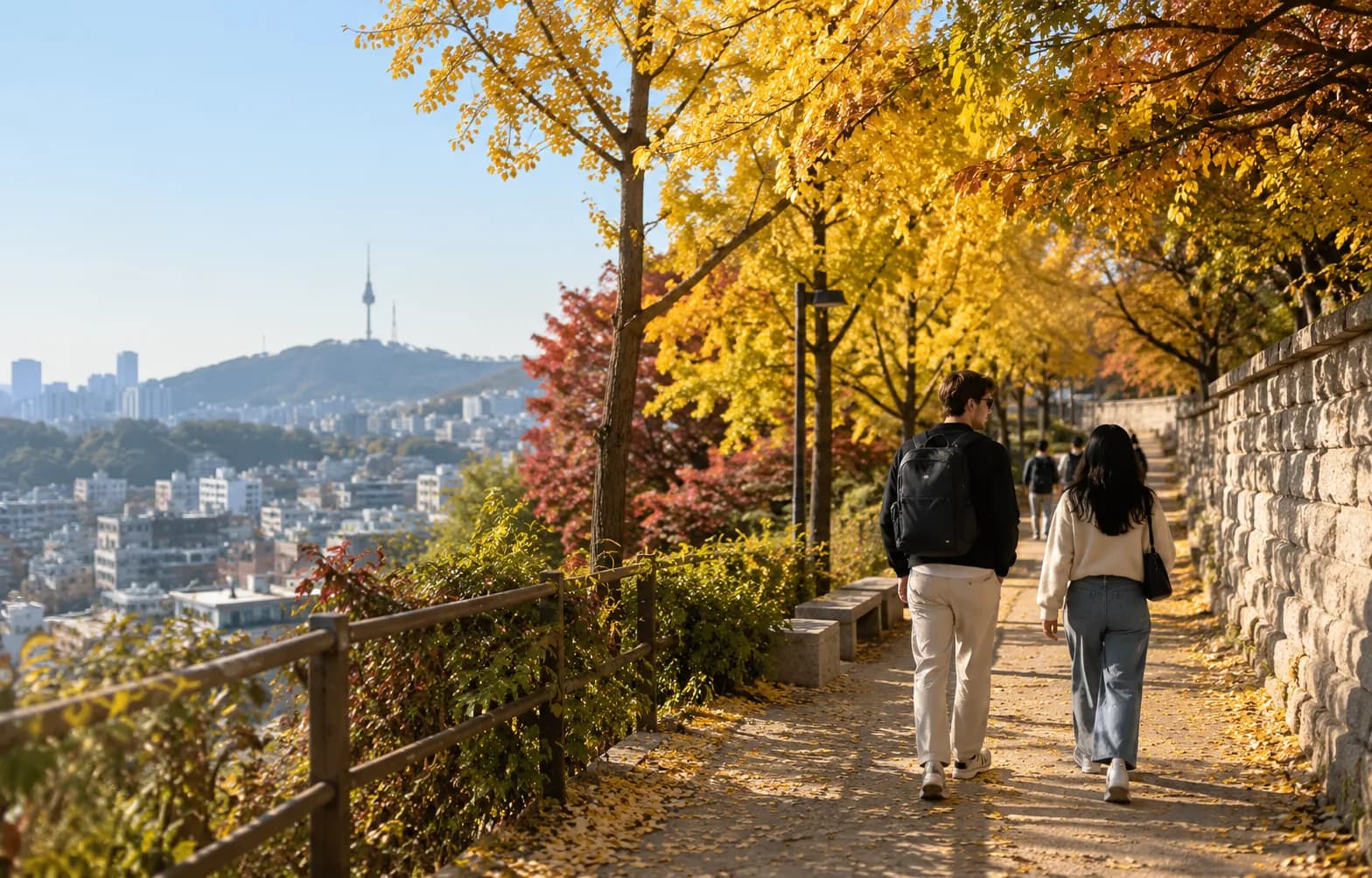
Illustration: Korea Tailwind
Seoul's autumn color usually peaks in the city between the last week of October and the first week of November. In 2026 the forecast points to the later end of that window: Bukhansan showed first color around October 16–23, and the central region is expected to peak roughly October 31 – November 5. Inside the city, parks and palace grounds usually run a few days behind the mountains, so early November is the safest bet.
You don't need a mountain hike to see it. Every route below is flat or gently uphill, starts at a subway exit, costs nothing or 3,000 KRW to enter, and ends somewhere with good coffee. Pick one per day. Don't try to do three.
Who this is for
First-time visitors who want to see autumn Seoul the way people who live here do — a walk, a coffee, no itinerary stress.
Each route has four parts: the walk, the café, Min's Take (what the person who wrote this actually does), and the practical bits — closing days, fares, which exit.
Pick a route
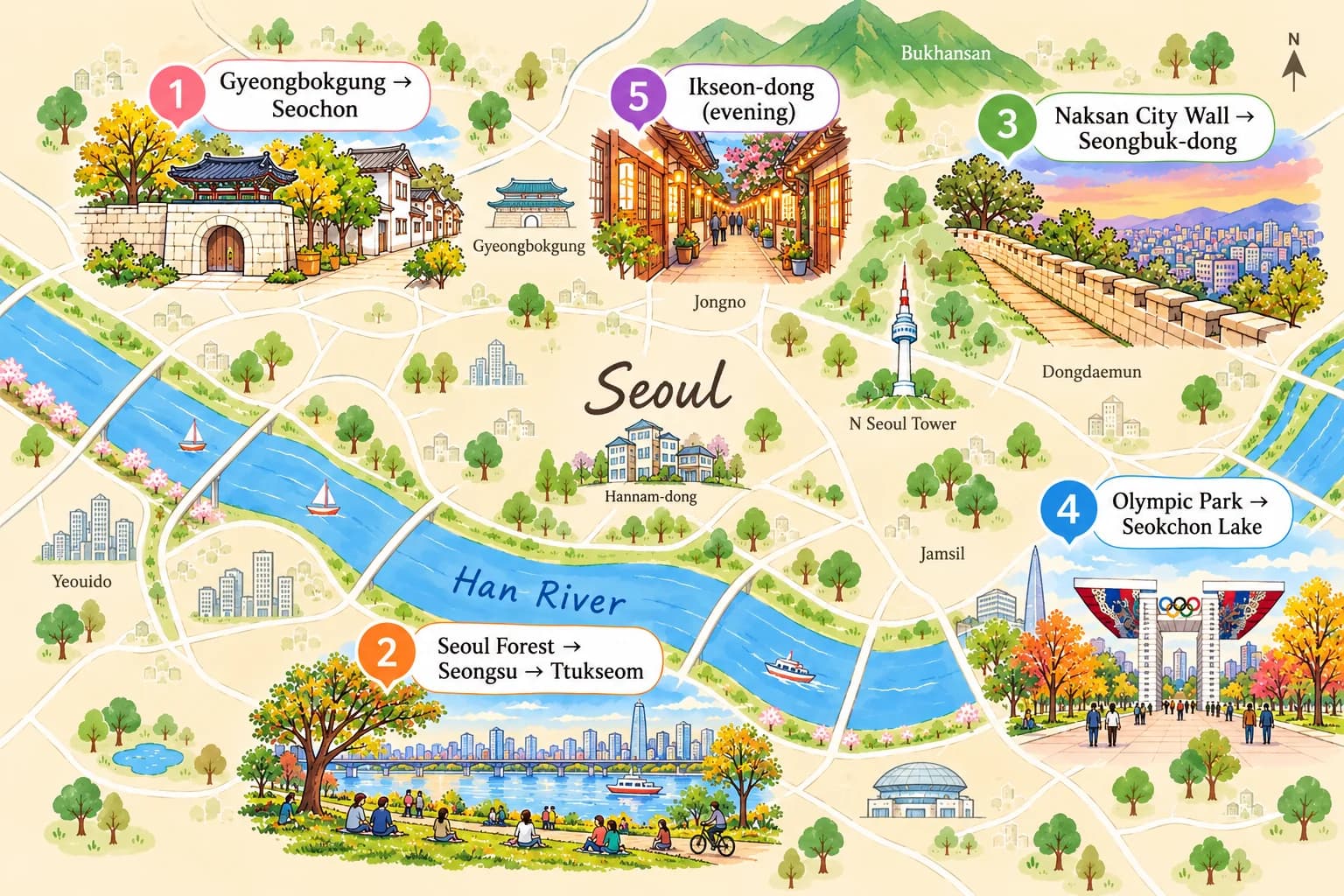
Not to scale. Illustration: Korea Tailwind
Route 1 · Gyeongbokgung → Seochon (half day, daytime)
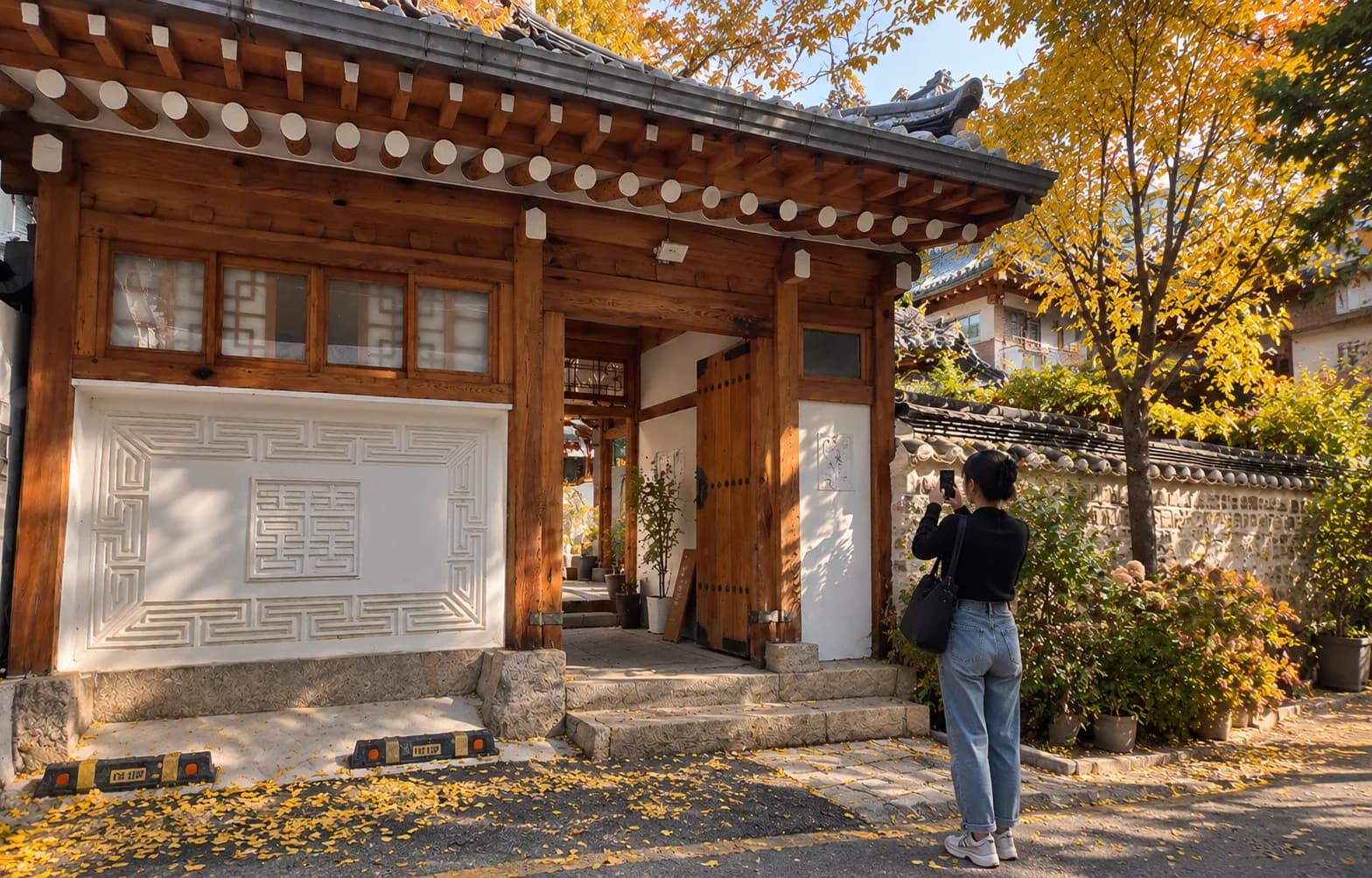
The walk. Enter Gyeongbokgung from Gwanghwamun, head toward the back of the grounds, and leave through the west gate (Yeongchumun) straight into Seochon. The palace is where the ginkgo and maples sit against tiled roofs; Seochon is the low-rise hanok neighborhood right behind it, with narrow lanes, small galleries and a lot of bakeries.
The café. Two easy picks that travelers can find without Korean: Camel Coffee (Seochon branch, daily 8:00–21:00) for a signature cream coffee, and SCOFF Bakehouse (Seochon branch, 8:30–20:00) for scones and brownies — popular items sell out, so earlier is better.
Min's Take. Seochon is a daytime place for me. The lanes are best around 10 a.m. to 2 p.m. when the light hits the walls; by evening it goes quiet. If you want an evening, don't stay here — jump to Route 5.
Practical. Gyeongbokgung is closed on Tuesdays. Adult ticket 3,000 KRW; wear a hanbok (rental shops line the street outside) and entry is free. The palace grounds are big — budget 90 minutes inside before the walk to Seochon. Nearest subway: Gyeongbokgung Station (Line 3), exit 5.
Route 2 · Seoul Forest → Seongsu → Han River ramyeon (afternoon → sunset)
The walk. Seoul Forest is the city's answer to a central park: free, open 24 hours, and its ginkgo grove (about 600 trees) is the single most photographed autumn spot in Seoul for a reason. Walk the grove and the hill path, then cross the road into Seongsu — former factories turned into cafés, pop-ups and showrooms.
The café. Seongsu has more good cafés per block than anywhere in Seoul; we keep a separate guide for it, including how to pay when your foreign card gets rejected at the subway gate.
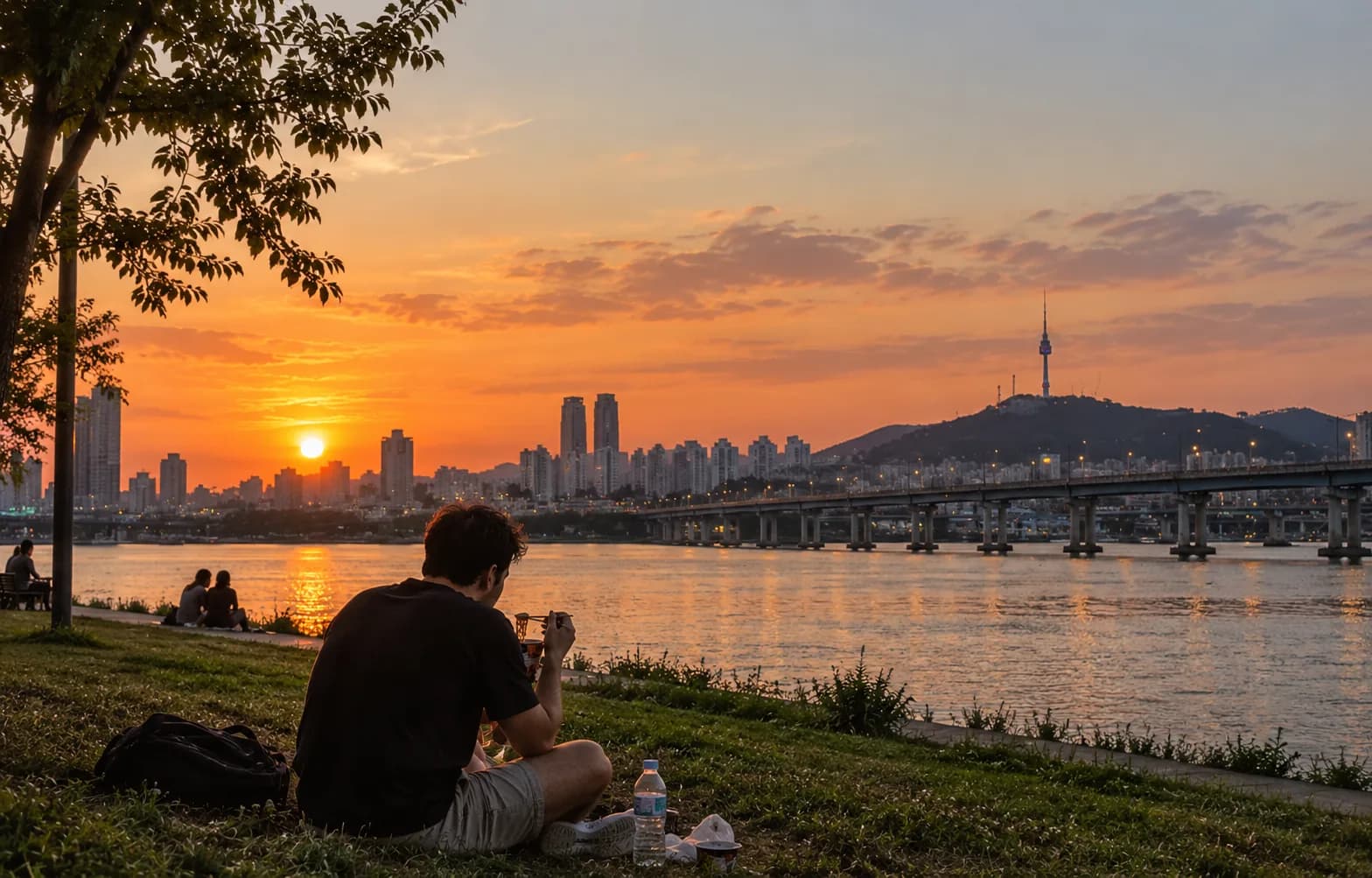
Then the part most guides skip. From Seoul Forest, the underpass leads to Ttukseom Hangang Park. Buy a packet of ramyeon at the riverside convenience store, cook it in the self-service machine by the window, and eat it on the steps while the sun goes down behind the bridges. It costs a few thousand won and foreigners now queue for it on weekends — go on a weekday if you can.
Min's Take. Ramyeon on the Han River is one of those things I can't give up, no matter how many times I've done it. It's not about the food. It's about sitting there with the water in front of you when the air gets cold.
Practical. Seoul Forest Station (Suin-Bundang Line), exit 3. Free. The ramyeon machine: pick a packet from the shelf, pay at the counter (foreign Visa/Mastercard work at CU and GS25), put the noodles in the pot, press start. Add the egg and cheese they sell next to it. Sunset in Seoul in late October is a little after 5:30 p.m. — arrive by 5.
Route 3 · Seoul City Wall, Naksan section → Seongbuk-dong cafés (half day)
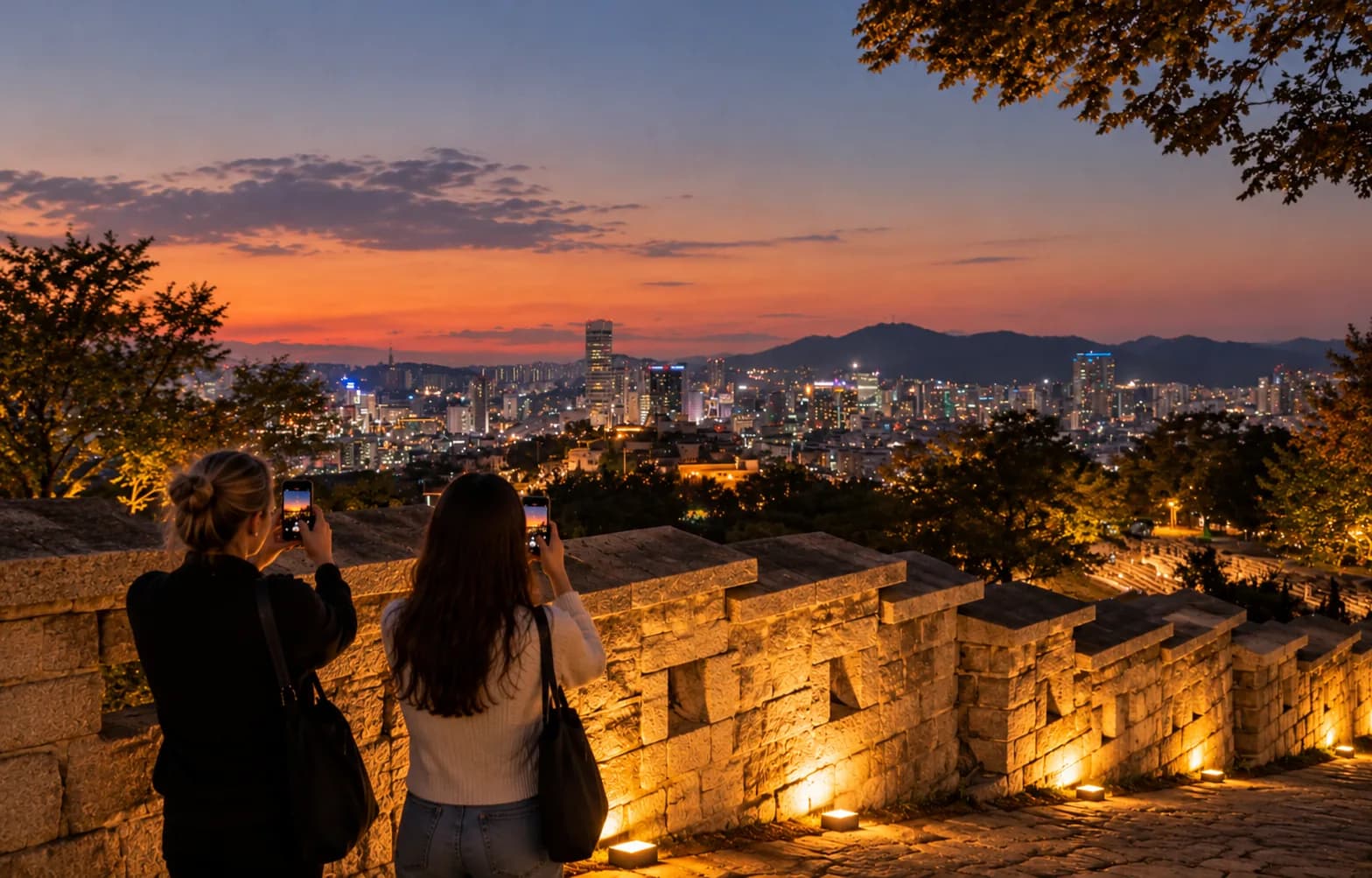
The walk. Hanyangdoseong — the Seoul City Wall — is the 600-year-old fortress wall that rings the old city. The Naksan section is the easiest of its six stretches: 2.1 km, about an hour, from Hyehwamun (Hansung Univ. Station, exit 4) over Naksan Park to Heunginjimun (Dongdaemun). Naksan is only 126 m high. You walk along the wall with the northeast of Seoul laid out below you, through two old hillside neighborhoods — Jangsu Village outside the wall, Ihwa Village inside it.
Walk it north to south (Hyehwamun → Dongdaemun) if you want to end at the market; walk it south to north if you want to end at the cafés.
The café. Finish (or start) at Hansung Univ. Station, exit 5. Seongbuk-dong begins right there — a quiet slope of old houses with a cluster of good cafés. Haero Coffee is a 1940s hanok doing specialty brewing, a couple of minutes from the exit. Further up the road the neighborhood has a bakery street and Gilsangsa temple, which is also a foliage spot.
Min's Take. This is the walk I'd actually recommend to a friend. The City Wall gives you the view without the climb, and the Hansung-dae side is where the cafés are — a neighborhood, not a tourist strip. Most visitors never come up here.
Practical. Free, open all day, no ticket. Some stairs at the Hyehwamun end — fine in normal shoes. The Seoul City Wall Museum sits at the Dongdaemun end if you want context (free). The wall is lit after dark, so a late-afternoon start that ends at dusk works too.
Route 4 · Olympic Park morning → Seokchon Lake (morning)
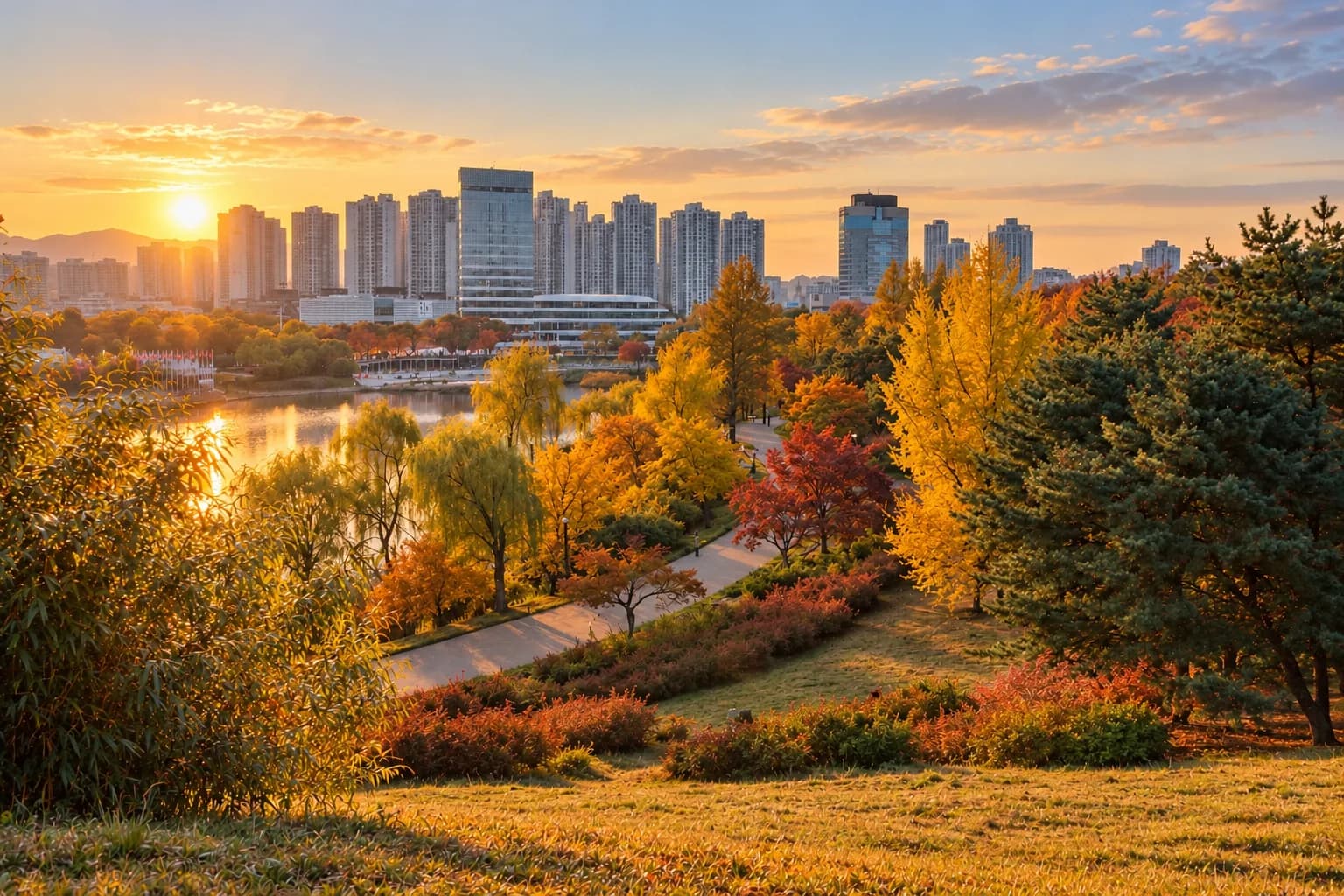
The walk. Olympic Park in Songpa is 480 hectares of lawn, sculpture and the earthen walls of Mongchontoseong, a Baekje-era fortress. The loop around the fortress is the foliage walk, and Wiryeseong-gil — the ginkgo-lined road running along the park's south wall from the World Peace Gate, about 1,300 trees over 2.7 km — turns solid yellow in early November and is on the Seoul city foliage list. Because the park is so big, color lasts here into mid-November, later than most of the city.
The café. Walk or take two subway stops to Seokchon Lake. The east side of the lake has terrace cafés facing the water, and the lake jogging loop (about 2.5 km, cherry trees that turn orange-red in autumn) is on the Seoul city foliage list too.
Min's Take. Olympic Park on a clear October morning is a place I'd choose over the famous tourist spots. I go early to jog the fortress loop while it's still quiet, then coffee. Don't over-plan it. The point is the morning.
Practical. Olympic Park: Mongchontoseong Station (Line 8) or Olympic Park Station (Line 5). Free, open from early morning. Seokchon Lake: Jamsil Station (Line 2 exit 1 / Line 8 exit 10). Free. This whole route is in southeast Seoul — about 35 minutes from the city center by subway. Pair it with Lotte World Tower if you're staying in Jamsil.
Route 5 · Ikseon-dong at dusk (evening add-on)
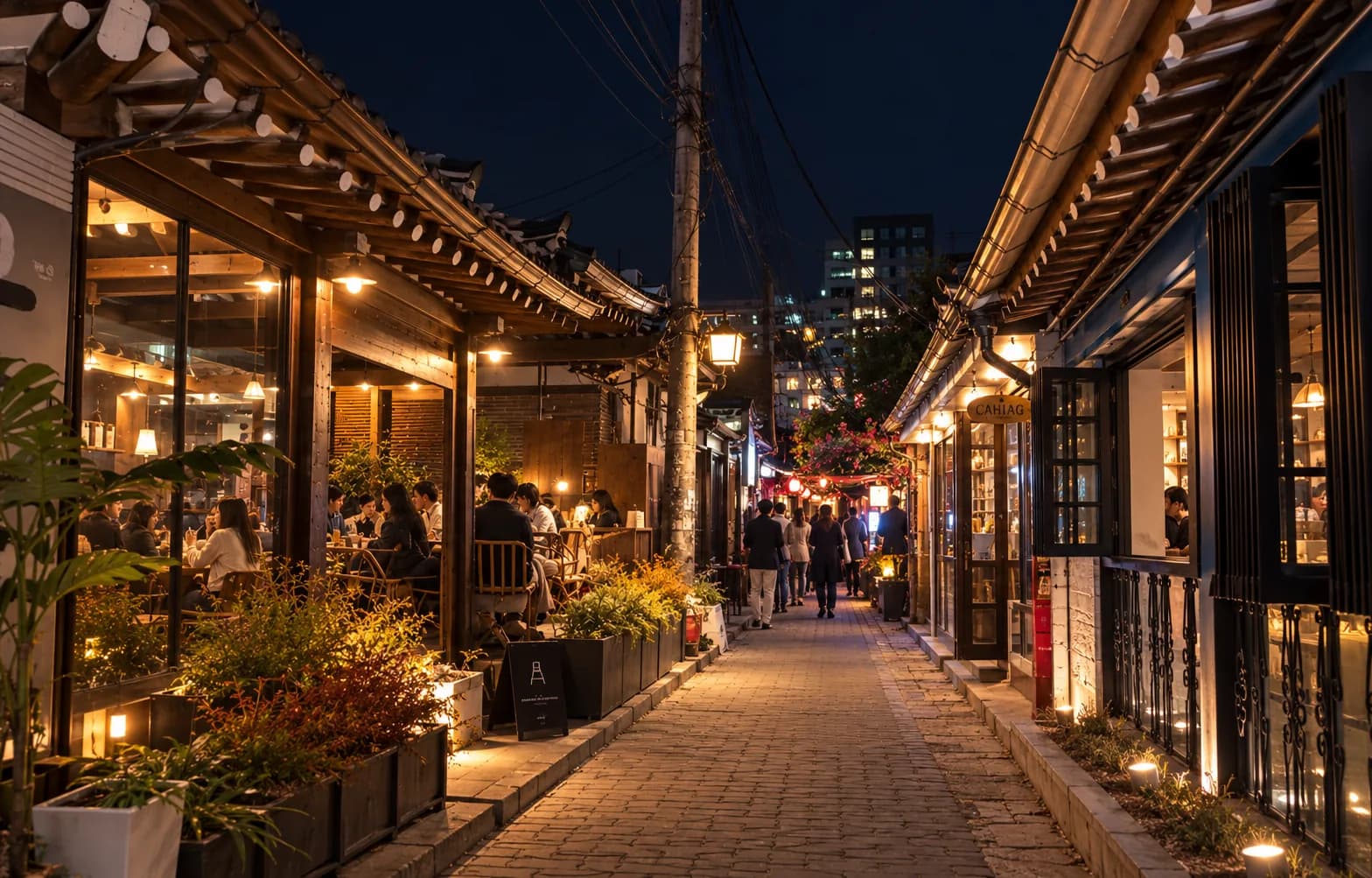
The walk. Ikseon-dong is a block of 1920s hanok between Jongno 3-ga and Insadong, now packed with small restaurants, bars and cafés inside the old houses. In daylight it's crowded and a bit much; after 5 p.m., when the lanterns come on, it's the best hanok atmosphere in the city.
The café, or the drink. Pick any lane and follow it. Most places here are tiny, so expect to wait on weekends. Many of the cafés turn into bars after dark.
Min's Take. Seochon is for the daytime; Ikseon-dong is for the evening. I'd do Route 1 or 3 in the morning, rest, then come here around sunset. Doing both in daylight is a mistake people make.
Practical. Jongno 3-ga Station (Lines 1, 3, 5), exit 4 or 6. Alleys are narrow — not great with a stroller or large luggage.
About Bukhansan
Bukhansan is the mountain everyone names for Seoul autumn, and the foliage is real. But it's a proper hike — a few hours, steep in places, and busy on peak weekends. If you want the color without the climb, the City Wall (Route 3) gives you a lot of it. If you do go, the Dulle-gil ("circle trail") sections around the base are gentler than the summit routes.
Min: I've done it. It's good, but it's harder than people expect, and it's not a half-day.
What you'll need
Transport. All five routes start at a subway exit. A T-money card (buy at any convenience store, load with cash) covers subway and bus; your foreign credit card will not tap in at the gate, so get the card on day one.
Data. You'll be using maps constantly — Naver Map or Kakao Map, since Google Maps walking directions are unreliable in Korea. Sort an eSIM before you land. A data-only tourist eSIM gives you internet, not a Korean phone number, so it won't pass Korean identity verification — for these walks, data is all you need. Use code TAILWIND15 for 15% off Nomad eSIM.
Paying. Cafés and convenience stores take foreign Visa/Mastercard almost everywhere. Palace ticket windows do too. Keep a little cash for the odd small shop.
Arriving. If this is your first day, the airport-to-city decision comes first.
Foliage forecast as of October 19, 2026 (Weatheri / Korea Meteorological Administration data). Dates move with the weather; check a day or two before you go.
Korea Tailwind may earn a commission from some links on this page, at no extra cost to you. We only recommend options we'd tell a friend to use.
← All articles